
The week's losses wiped out investor wealth worth Rs 18.43 trillion, with the total market capitalisation of BSE-listed firms now at Rs 441 trillion.

India's manufacturing sector activities improved in September as companies benefited from strengthening demand conditions amid the easing of COVID-19 restrictions, a monthly survey said on Friday. The seasonally adjusted IHS Markit India Manufacturing Purchasing Managers' Index (PMI) improved from 52.3 in August to 53.7 in September, indicating a stronger expansion in overall business conditions across the sector. The September PMI data pointed to an improvement in overall operating conditions for the third straight month. In PMI parlance, a print above 50 means expansion while a score below 50 denotes contraction.

The Reserve Bank on Tuesday cautioned that continued uncertainty over monsoon could stoke food inflation, but expressed the hope that government policies will improve supplies in the coming months.

October infrastructure output, which contributes nearly 38 per cent to the industrial output index, was up 3.2 per cent annually.

Short-term lending (Repo) rate is unchanged at 8 per cent.

After turning net buyers last month, foreign investors have become aggressive shoppers of Indian equities and have invested Rs 22,452 crore in the first two weeks of August amid softening inflation concerns. This was way higher than a net investment of nearly Rs 5,000 crore by Foreign Portfolio Investors (FPIs) in the entire month of July, data with depositories showed. FPIs had turned net buyers for the first time in July, after nine straight months of massive net outflows, which started in October last year.

Inflation to peak in the current quarter within tolerance band, moderating in the second half of next fiscal, says central bank.

Indian factory growth likely slowed in Jan, inflation to stay muted.

Benchmark equity indices Sensex and Nifty closed higher by more than half a per cent on Wednesday following buying in IT, financial and oil stocks after the RBI slowed down the pace of interest rate hikes. Ending its two-day slide, the 30-share BSE Sensex rebounded by 377.75 points or 0.63 per cent to close at 60,663.79 with 24 of its constituents posting gains. The broader Nifty of the NSE spurted by 150.20 points or 0.85 per cent to settle at 17,871.70, riding on a rally in Adani Enterprises, Adani Ports and HDFC Life.

The reading for June WPI inflation was revised to 5.66 percent from 5.43 percent earlier.

Analysts polled by Reuters had expected an annual output growth of 3.5 per cent for the month.

Equity benchmark indices Sensex and Nifty settled higher on Thursday, powered by a rally in banking and power stocks amid a largely firm trend in global markets. The stock markets mostly traded range-bound in the absence of any major trigger and persistent foreign capital outflows, traders said. The 30-share BSE Sensex rose 144.31 points, or 0.18 per cent, to settle at 81,611.41.

Rise in vegetable prices can reverse the benefits of low oil prices.

The RBI expects inflation in 2015 to hover around 6 per cent -- its target for January 2016 -- and sees risks to the target evenly balanced.

RBI Governor Raghuram Rajan on Friday said keeping inflation low is the key task for sustainable economic growth of the country.

Equity investors have become poorer by more than Rs 18.74 lakh crore as the market continued to remain bearish for the fifth session on the trot on Thursday. The 30-share BSE Sensex tumbled 1,158.08 points or 2.14 per cent to end below the 53,000-level at 52,930.31 points on Thursday. Markets have been falling for five straight sessions and the BSE benchmark has tumbled 2,771.92 points or 4.97 per cent during this period.

Government's effective supply-side measures and commendable commitment to fiscal consolidation will have a salutary impact on inflation, says the RBI report.
.jpg)
Industry's demand for a reduction in the repo rate, currently 8 per cent, has gained momentum after wholesale and retail inflation eased in February.

Equity markets will take cues from global trends and trading activity of foreign investors, while in the latter part of the week the first quarter earnings from IT majors TCS and HCL Technologies would guide investor sentiments, analysts said. Markets may consolidate after the record rally last week, experts added. "On the domestic front, the Q1 earnings season begins this week. Key companies such as TCS and HCL Technologies will release their earnings on July 11 and 12, 2024, respectively.

From Sensex firms, Tech Mahindra, Mahindra & Mahindra, Tata Motors, UltraTech Cement, Tata Consultancy Services, HCL Technologies, ICICI Bank and Tata Steel were the biggest gainers. Sun Pharma emerged as the only laggard.

Fall in both WPI and CPI inflation to pressure RBI, say analysts

The WPI number follows retail inflation (CPI) data, which had slipped to a record low of 3.78 per cent in July.
Hardening prices of manufactured items during the month may refrain the Reserve Bank of India from cutting rates in its policy review on February 8.

Elections may be a few months away, but the government may get into election mode much earlier than that, predicts A K Bhattacharya.

Much of the rise in prices has been in food items

Build up inflation rate in the financial year so far was 2 per cent compared to a build up rate of 4.56 per cent in the corresponding period of the previous year. Inflation in food articles as a group rose to 11.08 per cent during the month as against 9.80 per cent in the previous month, mainly driven by exorbitantly high onion prices, the rates of which spiked by over 172 per cent from a year-ago. The annual rate of inflation, based on monthly wholesale price index was at 0.16 per cent in October.

S&P Global Ratings on Monday cut India's economic growth forecast for current fiscal year to 7 per cent, but said the domestic demand-led economy will be less impacted by the global slowdown. S&P had in September projected the Indian economy to grow 7.3 per cent in 2022-23 and 6.5 per cent in next fiscal year (2023-24). "The global slowdown will have less impact on domestic demand-led economies such as India... India's output will expand 7 per cent in fiscal year 2022-2023 and 6 per cent in next fiscal year," S&P Global Ratings Asia-Pacific chief economist Louis Kuijs said.

The Reserve Bank on Wednesday hiked key benchmark policy rate by 25 basis points to 6.5 per cent, citing sticky core inflation. This is the sixth time interest rate has been hiked by the Reserve Bank of India (RBI) since May last year, taking the total quantum of hike to 250 basis points. Announcing the bi-monthly monetary policy, RBI Governor Shaktikanta Das said the Monetary Policy Committee (MPC) by a majority decided to raise the policy repo rate by 25 basis points and keep a 'strong vigil' on inflation outlook.
Institutional shareholders of Reliance Industries Limited (RIL) are expecting big-ticket announcements from the company, including timeline for listing of its telecom and retail subsidiaries. They expect this to unlock value in the company, which has seen a sharp fall in market valuation on Friday. This is due to windfall tax imposed by the Centre on refiners and oil producers.
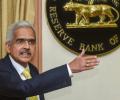
The Reserve Bank of India on Wednesday kept the benchmark interest rate unchanged at 4 per cent and decided to continue with its accommodative stance against the backdrop of concerns over the emergence of the new coronavirus variant Omicron.

The Central bank primarily factors Consumer Price Index while deciding on policy rate.

The Reserve Bank of India on Friday decided to keep benchmark interest rate unchanged at 4 per cent but maintained an accommodative stance even as the economy is showing signs of recovery after the second Covid wave.
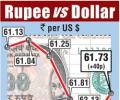
Forex dealers said besides a lower opening in the domestic equity market on fears of a rate hike by the Reserve Bank, higher demand for the American currency from importers put pressure on the rupee but dollar's weakness against other currencies overseas, capped the fall.

Those who have been following developments in the past few years know that Wal-Mart alone must have spent millions of dollars in India for lobbying with our government to open up retail sector for FDI.

Inflation data and global trends would be the major driving factors for the equity markets this week which after a record-breaking run took a breather in recent trades, analysts said. The overall market sentiment remains positive, supported by improving economic data and earnings but higher valuations can trigger bouts of profit booking, they said further. During the last week, which the 30-share BSE benchmark rose by 175.12 points or 0.30 per cent.

Dabur's performance in the July-September quarter of the current financial year (Q2FY25) was weak but in line with consensus. Consolidated revenue declined 5 per cent year-on-year (Y-o-Y) due to a temporary adjustment in General Trade (GT) inventory. Indian revenue declined 7.6 per cent, while international business grew 13 per cent Y-o-Y in constant currency (CC) terms.

The Reserve Bank on Wednesday increased the benchmark lending rate by 40 basis points (bps) to 4.40 per cent in a bid to contain inflation, which has remained stubbornly above the target zone of 6 per cent for the last three months. The decision follows an unscheduled meeting of the Monetary Policy Committee (MPC), with all six members unanimously voting for a rate hike while maintaining the accommodative stance. While the inflation has remained above the targetted 6 per cent since January, RBI Governor Shaktikanta Das said the inflation print in April is also likely to be high.

Pulses cropping has jumped to 39.4 per cent above 2015 levels.
WPI inflation even breached psychological level of 0% in Nov.

The current spurt in the stock market is on account of strong fundamentals and robust corporate earnings and retail investors can look for buying opportunities to accumulate quality stocks, experts said.
